
Tesla reports first production-quality Optimus units from its Fremont line
Tesla says its Fremont line has begun producing production-quality Optimus robots. The disclosure marks manufacturing progress, while unit volumes, customer deliveries and dependable productive deployment remain unverified in the cited update.
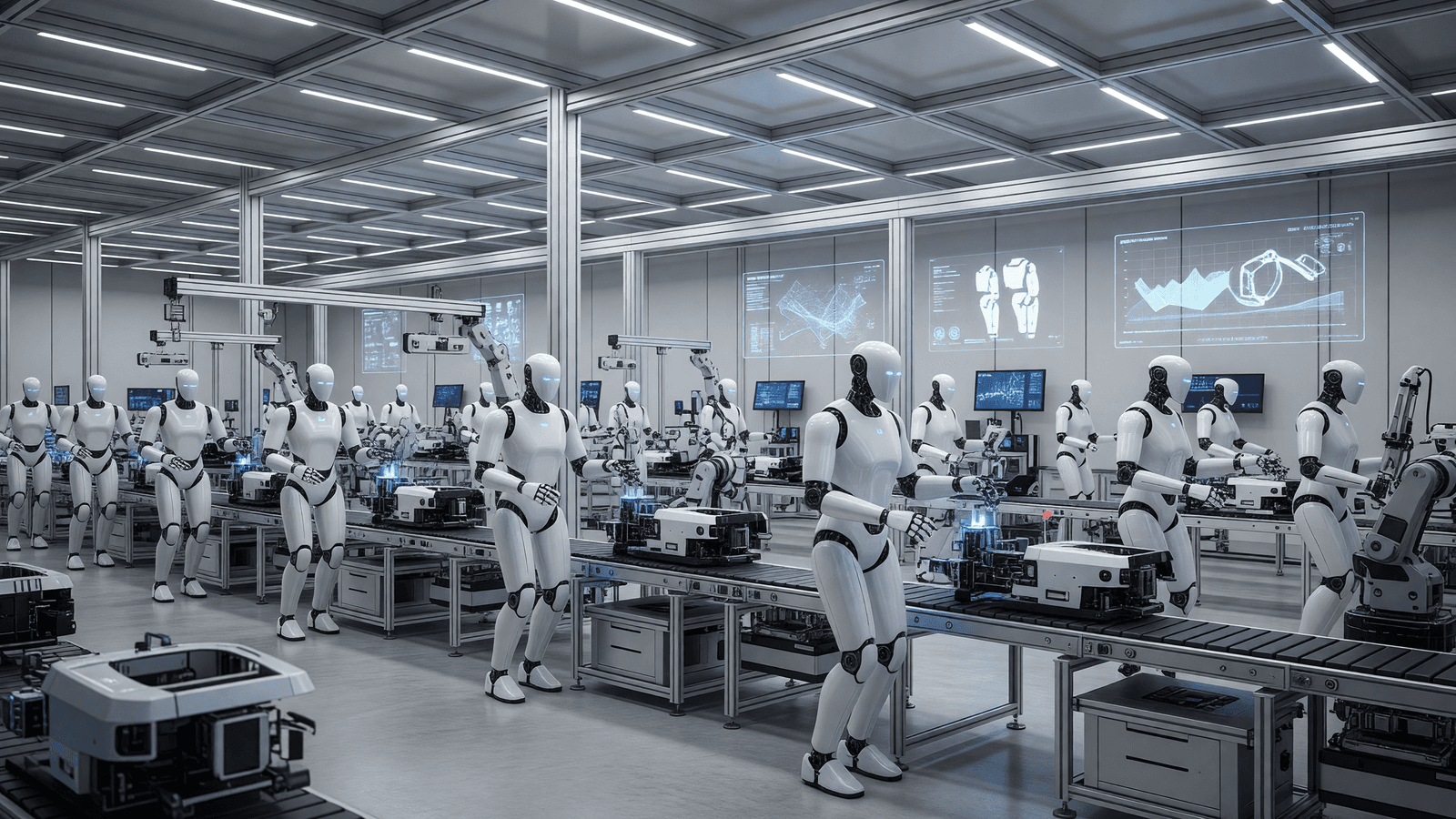
Tesla’s 21 October quarterly update says Optimus production has begun on its Fremont high-volume lines and describes the resulting units as its first production-quality robots. Its manufacturing table labels California as an early ramp and Texas as under construction, without a numerical robotics capacity. The correct development status is therefore an early manufacturing ramp reported by the producer. [s1]
Tesla’s 21 October quarterly update says Optimus production has begun on its Fremont high-volume lines and describes the resulting units as its first production-quality robots. Its manufacturing table labels California as an early ramp and Texas as under construction, without a numerical robotics capacity. The correct development status is therefore an early manufacturing ramp reported by the producer. [s1]
A line designed for volume production is not the same as demonstrated high-volume output. The disclosure does not provide a robot unit total, customer delivery count or independent operating record. Nor does making a robot establish that it can perform economically useful work for a full shift under ordinary factory conditions. These are separate milestones with different evidence requirements.
The strongest case for significance is that repeatable manufacturing can be a prerequisite for broader deployment. Improvements in assembly, component supply and production quality may make it possible to test many more units and learn from their operation. The limit is that manufacturing readiness alone cannot establish reliability, autonomy or commercial demand.
For workers and purchasers, the next evidence should concern actual tasks: duration, successful completion, human intervention, safe stopping and performance around people. A demonstration can show that an action is possible, while deployment records show how often it works and what happens when it fails. Cost comparisons also need maintenance and supervision, rather than simply a hardware price.
This story remains in Robotics. It does not count a produced robot as a displaced worker or infer a labor-market outcome from an investor milestone. Tesla develops Optimus and benefits from confidence in its commercialization. The source supports the company’s stated manufacturing progress; shipment volumes and dependable productive use remain open questions. [s1]
Evidence assessment: 6/10 — Emerging credible evidence | Scoring confidence High. Direct producer disclosure documents a manufacturing claim; output and productive deployment are unverified.
Interests and provenance: Tesla develops and markets Optimus; investor expectations are relevant to the disclosure.
Sources: [s1] Tesla — Tesla Q3 2026 Update — Manufacturing and Hardware (2026-10-21): https://assets-ir.tesla.com/tesla-contents/IR/TSLA-Q3-2026-Update.pdf
What we do not know
- Q: Does a high-volume line establish high-volume robot output or commercial adoption? A: No. Tesla reports first production-quality units and labels California an early ramp, without a numerical robotics output or delivery total. Manufacturing capacity, actual production and productive deployment remain separate claims. [s1]
- Q: Can the robots safely perform useful work without frequent human intervention? A: The cited update does not establish that. Independent records of task success, operating hours, interventions, safe stopping and failures around people would be needed. A manufacturing milestone is not a workplace safety case. [s1]
- Q: Can the announcement be counted as workers displaced or costs saved? A: No worker-equivalent or verified labor-saving total follows from the disclosure. Human-centered follow-up should examine actual tasks, supervision, job changes and maintenance costs before assigning employment or productivity effects. Those outcomes remain unverified here. [s1]
Sources
Interests and disclosures
- Parties identified in the article
- Tesla develops and markets Optimus; investor expectations are relevant to the disclosure.