
Schaeffler puts humanoids into robot-component production .
Schaeffler announced on 20 October that it had opened a humanoid-robotics factory in Taicang, China. The company says six humanoids work across five stations assembling components for other robots.
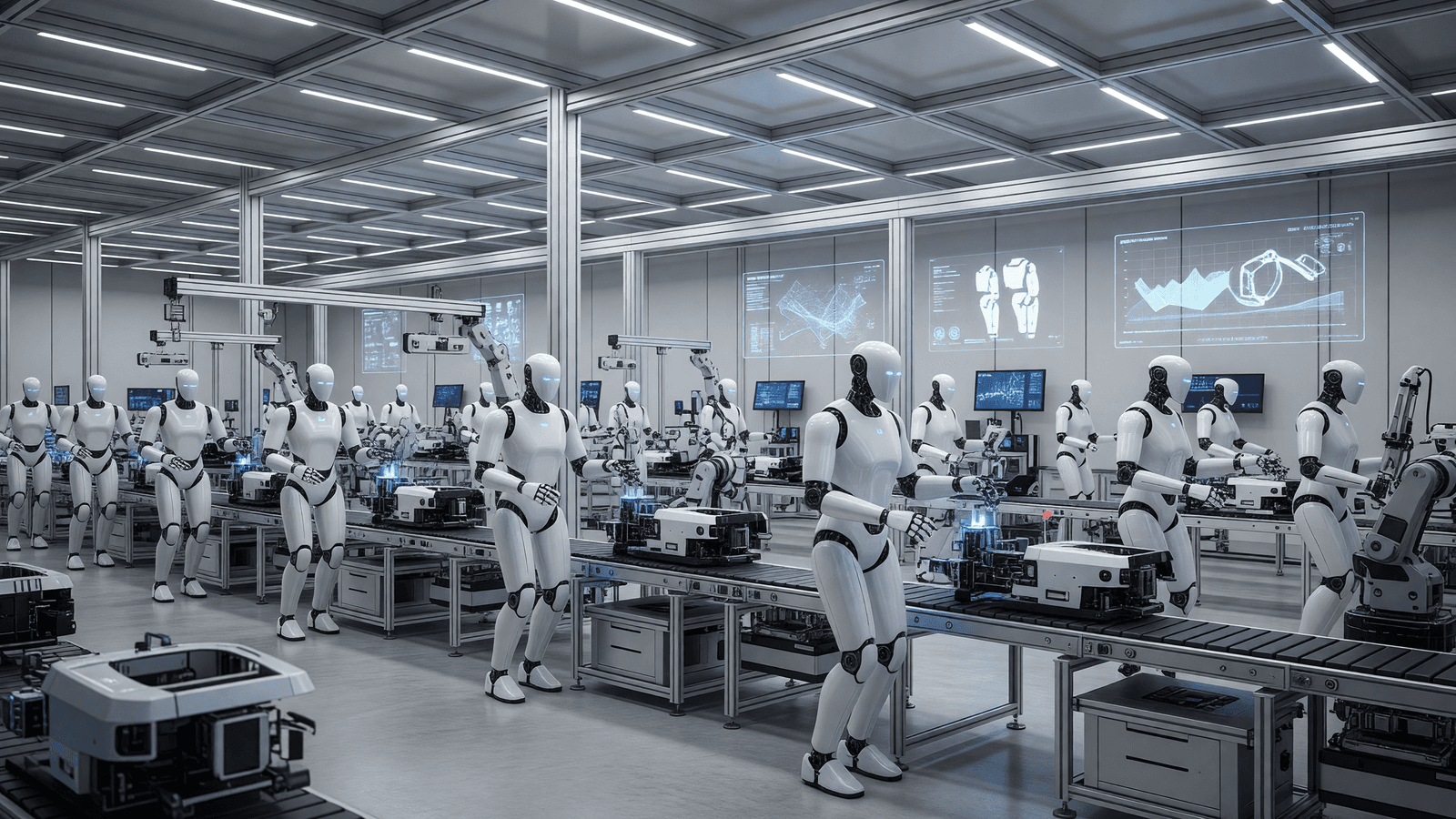
Schaeffler announced on 20 October that it had opened a humanoid-robotics factory in Taicang, China. The company says six humanoids work across five stations assembling components, within a site combining production, training, data collection and digital twins. The robots handle parts of the workflow for joint modules and actuators used in other robots. [s1]
Robots helping manufacture robot components is a powerful image of technological acceleration. Schaeffler's Taicang factory makes it concrete enough to inspect, rather than accept as a symbol of inevitable human redundancy.
Schaeffler announced on 20 October that it had opened a humanoid-robotics factory in Taicang, China. The company says six humanoids work across five stations assembling components, within a site combining production, training, data collection and digital twins. The robots handle parts of the workflow for joint modules and actuators used in other robots. [s1]
This is a more specific industrial claim than a staged movement demonstration: a named facility and production tasks are identified. However, the account does not publish throughput, intervention rates, uptime or comparative labor costs. It supports a manufacturer-reported deployment milestone, not independently demonstrated economic superiority or fully autonomous operation.
The phrase robots making robots can encourage the impression of a self-sustaining technological organism. The disclosed factory remains a human-managed production system with selected automated tasks. Keeping that reality visible matters when industrial imagery is used to suggest that human contribution is already becoming incidental.
The supplier benefits when humanoid adoption appears commercially mature. Workers and the wider public need another accounting: safety, skills, supervision, ownership and the distribution of gains. A factory can become more automated without becoming a better human institution. Those choices belong in public debate before scale is treated as its own justification.
What we do not know
- The release describes component assembly at selected stations within a managed factory, but at what point will robots be making robots autonomously?
Sources
Interests and disclosures
- Parties identified in the article
- Schaeffler sells robot components and benefits commercially from humanoid adoption.