
Phantom Neuro begins human implantation of its muscle interface
Phantom Neuro announced the first human implantations of an interface for prosthetic control. The device reads residual-limb muscle signals, and the ongoing feasibility study has not established long-term clinical benefit.
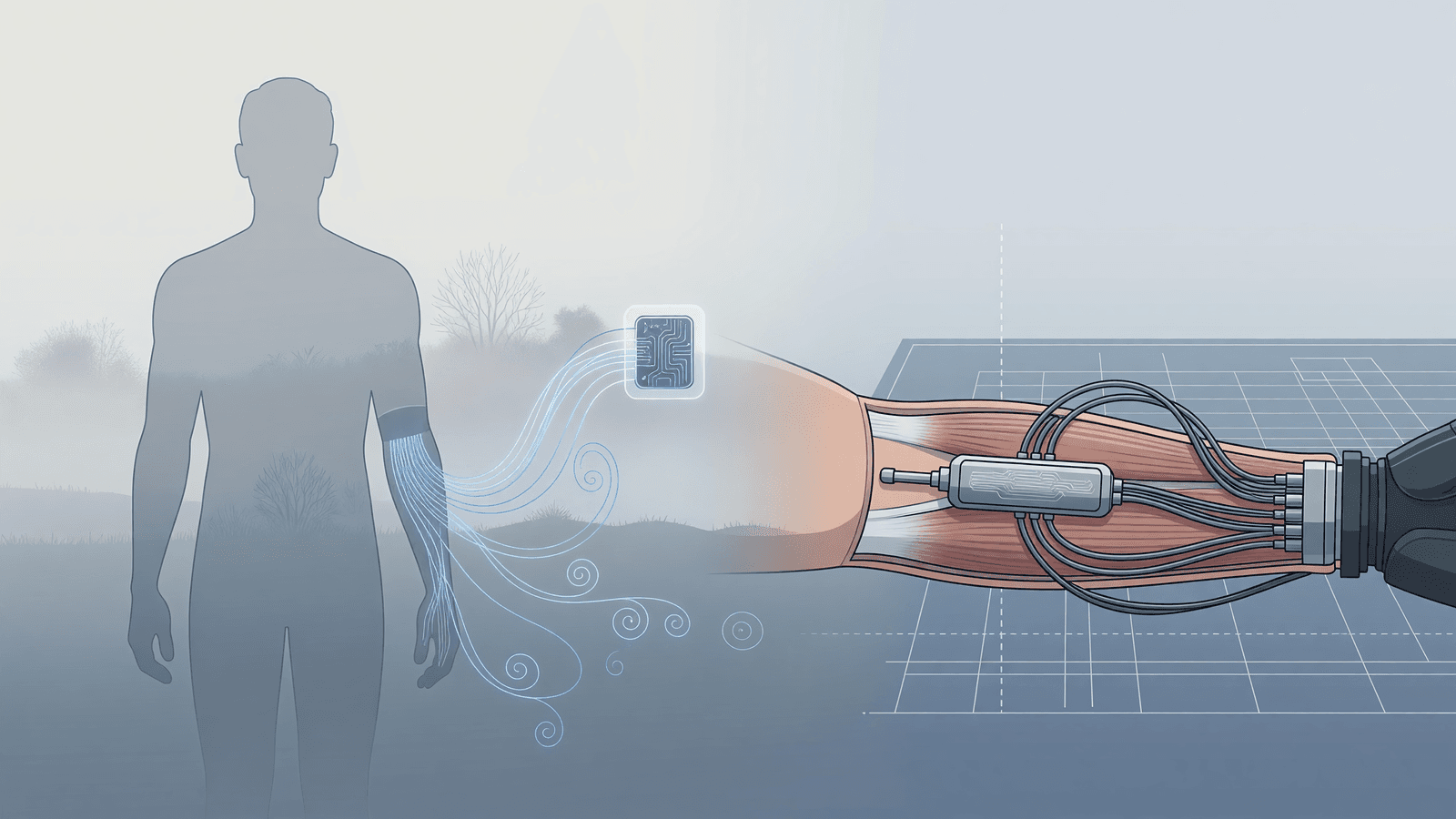
Phantom Neuro announced on 20 October that the first participants in its CYBORG early feasibility study had received Phantom X implants at Cabrini Health in Melbourne. The device sits beneath the skin over residual-limb muscles and is intended to translate attempted hand and wrist movements into commands for a compatible prosthesis. It is not an implant in the brain. [s1]
Phantom Neuro announced on 20 October that the first participants in its CYBORG early feasibility study had received Phantom X implants at Cabrini Health in Melbourne. The device sits beneath the skin over residual-limb muscles and is intended to translate attempted hand and wrist movements into commands for a compatible prosthesis. It is not an implant in the brain. [s1]
The company describes outpatient procedures lasting about an hour without general anesthesia. Those procedural observations do not establish long-term safety, improved daily function or superiority to existing prosthetic control. The release explicitly describes the technology as investigational and not commercially approved. [s1]
The potential benefit is a more usable connection between a person’s intended movement and an artificial limb. That depends on performance outside an implantation procedure: repeated use, calibration, comfort, training and compatibility with the prosthesis all matter. Early implantation is the beginning of that evidence, not its conclusion.
The strongest positive interpretation is that human feasibility testing can now examine whether a less invasive interface delivers useful control. The limit is that a company announcement does not provide controlled comparative outcomes or extended follow-up. Future results should report adverse events, functional tasks, participant experience and whether useful control persists in daily life. Phantom Neuro develops the device and has a financial interest in its success; the cited release is company-supplied primary evidence. [s1]
Compatibility and reliable use at home remain questions for clinical follow-up, rather than established outcomes of implantation.
Evidence assessment: 6/10 — Emerging credible evidence | Scoring confidence Moderate. Company report of first clinical implantations; controlled long-term outcomes are not available.
Interests and provenance: Phantom Neuro develops and finances the investigational product.
Sources: [s1] Phantom Neuro / PR Newswire — Phantom Neuro Implants Neural Interface in Humans for the First Time (2026-10-20): https://www.prnewswire.com/news-releases/phantom-neuro-implants-neural-interface-in-humans-for-the-first-time-302912256.html
What we do not know
- Q: Does first human implantation prove long-term benefit or commercial readiness? A: No. The announcement concerns early feasibility procedures, and Phantom X remains investigational in the cited release. Long-term safety, useful daily function and comparative effectiveness are not established by implantation alone. [s1]
- Q: Is this a brain implant that reads arbitrary thoughts? A: No. The described sensor is placed under the skin over residual-limb muscles and translates movement-related muscle signals for compatible prosthetic control. The announcement does not establish broader thought reading or general cognitive enhancement. [s1]
- Q: What choices and support would participants retain if the device fails or the supplier withdraws? A: The cited release does not establish long-term maintenance, removal arrangements, data control or continuity of support. These are unresolved agency and access questions, not evidence that a failure has occurred. Participant follow-up should address them alongside functional outcomes. [s1]
Sources
Interests and disclosures
- Parties identified in the article
- Phantom Neuro develops and finances the investigational product.