
Beijing Targets 200,000 Robots a Year
A new three-year plan ties humanoid production to dedicated computing, real-world training data and a citywide safety system.
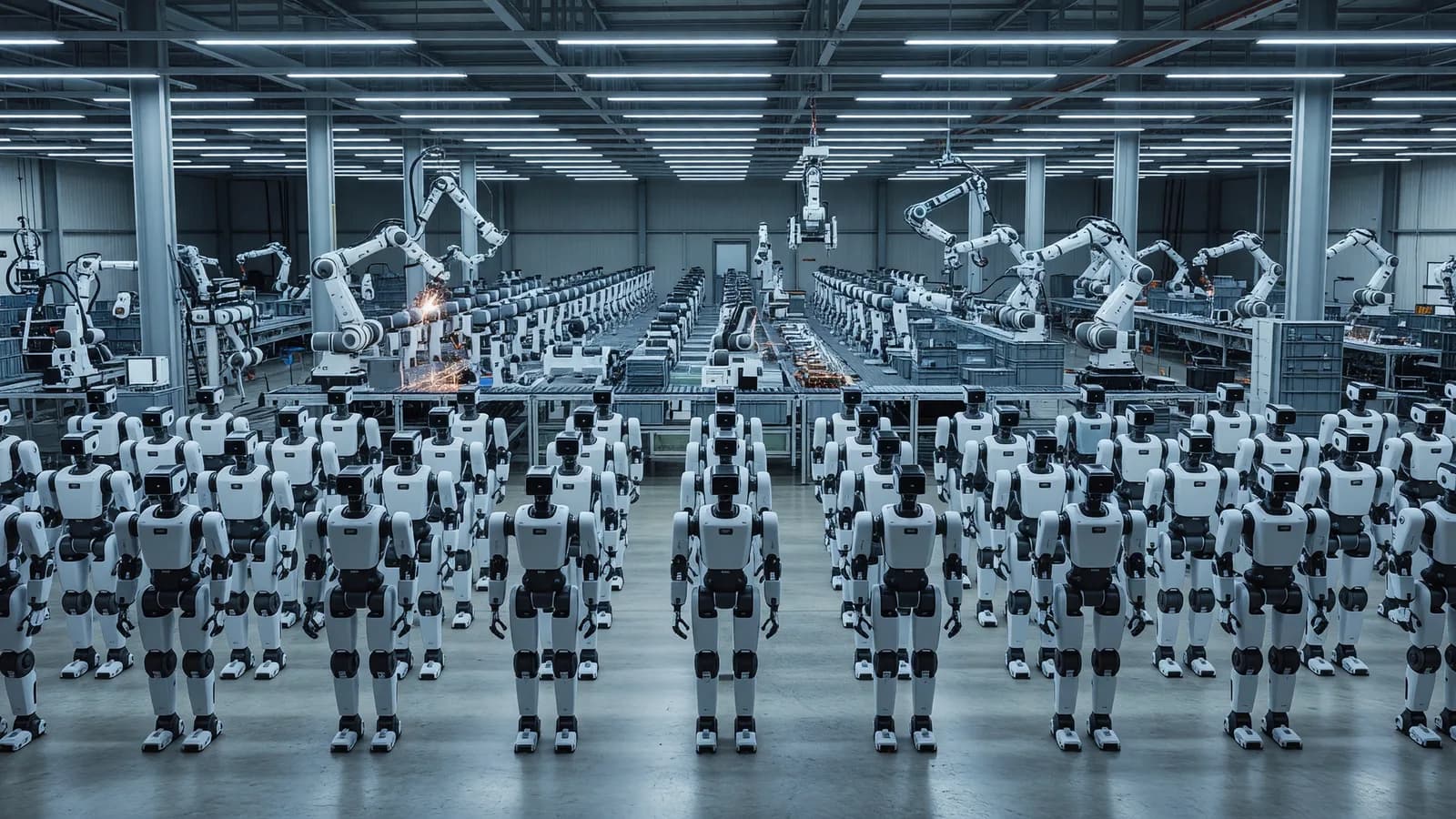
Beijing issued a 2026-2028 plan targeting large-scale embodied-AI development and annual production capacity of 200,000 robots.
Beijing has set a target that turns China's humanoid-robot campaign from a collection of factory experiments into a coordinated industrial program: capacity to produce 200,000 embodied-intelligence robots a year by 2028. [s1]
The municipal plan, issued November 11, calls for at least five internationally competitive humanoid manufacturers and ten nationally leading companies. It also seeks a 60 percent regional supply rate for essential components across Beijing, Tianjin and Hebei. [s1]
Robots need more than factories. Beijing wants dedicated computing capacity, more than one million hours of data gathered from at least 100 real-world settings, and common facilities where machines can be trained and evaluated after deployment.
The plan also promises a life-cycle safety-governance system. That matters because the city is not merely funding better robot bodies; it is building the institutions that decide where autonomous machines may operate, what data they collect and how their behaviour will be certified.
China is treating embodied AI as infrastructure. If Beijing reaches even part of its target, the important change will not be a spectacular humanoid demonstration. It will be the arrival of large fleets of learning machines in workplaces and public life.
What we do not know
- Q: Are 200,000 robots already being produced annually? A: No. That is Beijing's stated 2028 production-capacity target.
- Q: Where will the machines be tested? A: The plan calls for data and trials across at least 100 real-world settings, but the final deployment mix is not yet known.
Sources
Interests and disclosures
- Beijing Municipal Bureau of Economy and Information Technology
- The organization has a direct institutional, commercial or advocacy interest in the development described. Organisation: Beijing Municipal Bureau of Economy and Information Technology